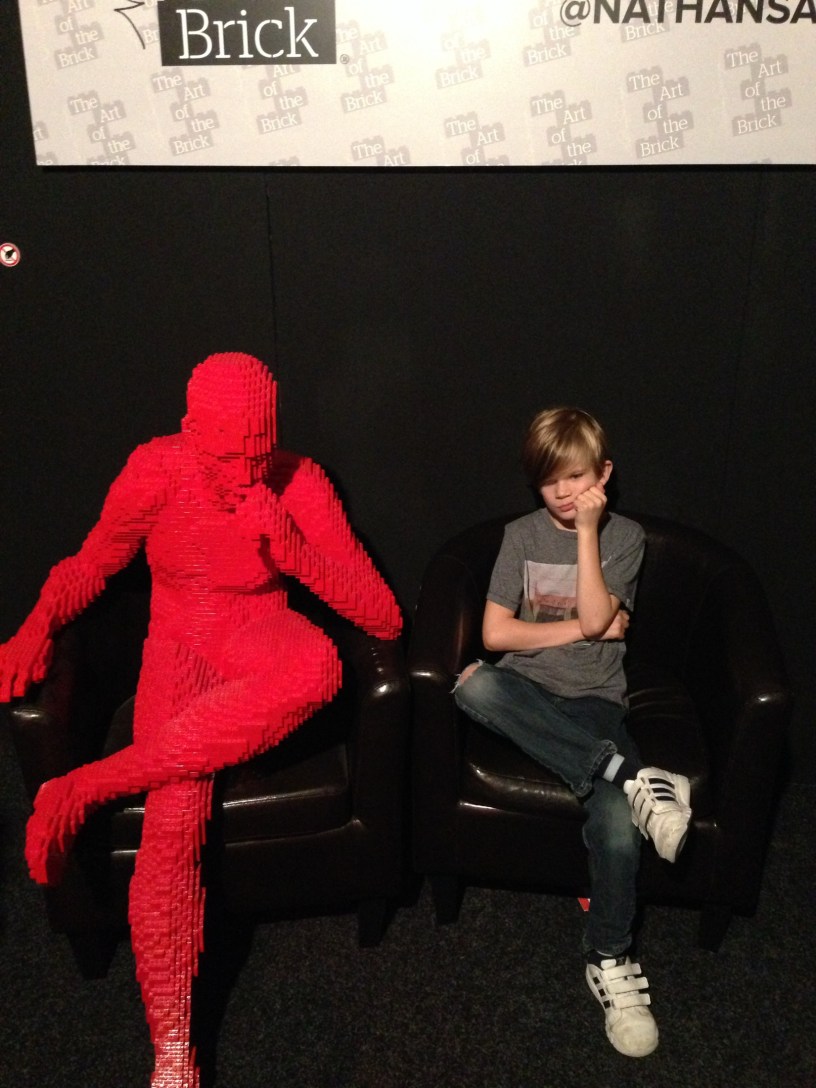
Jonah went back to the test centre yesterday. He always puts on a good show for his assessors, who yesterday included a child psychologist and a district nurse, seemingly becoming more awkward and less cooperative as if to prove to us all why he is there in the first place.
Jonah can act so grown up so much of the time, often more like a moody teen – with his surly attitude and encyclopedic knowledge of computer games – than a little boy. So, it always brings me up short when health and other professionals give me subtle cues to let me know they see this behaviour all the time in kids his age – lack of acknowledgement, no salutations, refusals, toy throwing…to be honest, Jonah’s had worse fits in doctor’s rooms than in many other places, but as the doctors themselves acknowledge, testing for ASD is a high stress activator, and they don’t expect perfect behaviour from any child.
Aware that, as parents, we are under scrutiny on these occasions, I scrubbed up for it, and Tom and I put on a united front, which wasn’t so much put on as encouraged by the situation – which invites you to look back on your child’s development, and comment on what you may or may not have noticed.
It’s a subject on which I can merrily wax lyrical, as regular readers will know. Particularly given, for many years, I felt that my concerns were disregarded by friends and relatives. So my sense of injustice leads me to appeal for confirmation that I was right all along.
I tried to temper my responses to the 100 or so questions we were asked about Jonah, and to let Tom, who has always had a more cautious approach to the subject of whether Jonah’s behaviour exceeds a line beyond normal, speak.
Aware too that they are looking for signs of ASD in us too, I felt it helpful to shut up a bit, and be more aware of others. But it’s hard to stop, when finally, after seven years, seven months, someone who might be able to help, explain and calm my concerns, is actually listening to them.
Jonah was taken away from us so the nurse could observe him alone and talk to him without our input, a process he found stressful enough to halt halfway through. Questions that unnerved him included was he happy? lonely? Could he answer these questions, or did they make him uncomfortable? I don’t know the answer, but his refusal was telling… but telling of what?
In two weeks we go back again and hear the outcome – the hundred or so answers we gave are scored and measured against all the other expert scrutiny so far, and I expect the answer will be one we’ve known all along – he’s challenging, will continue to be so, but he’ll be fine.
And I can live with that.
Discover more from Looking at the little picture
Subscribe to get the latest posts sent to your email.
