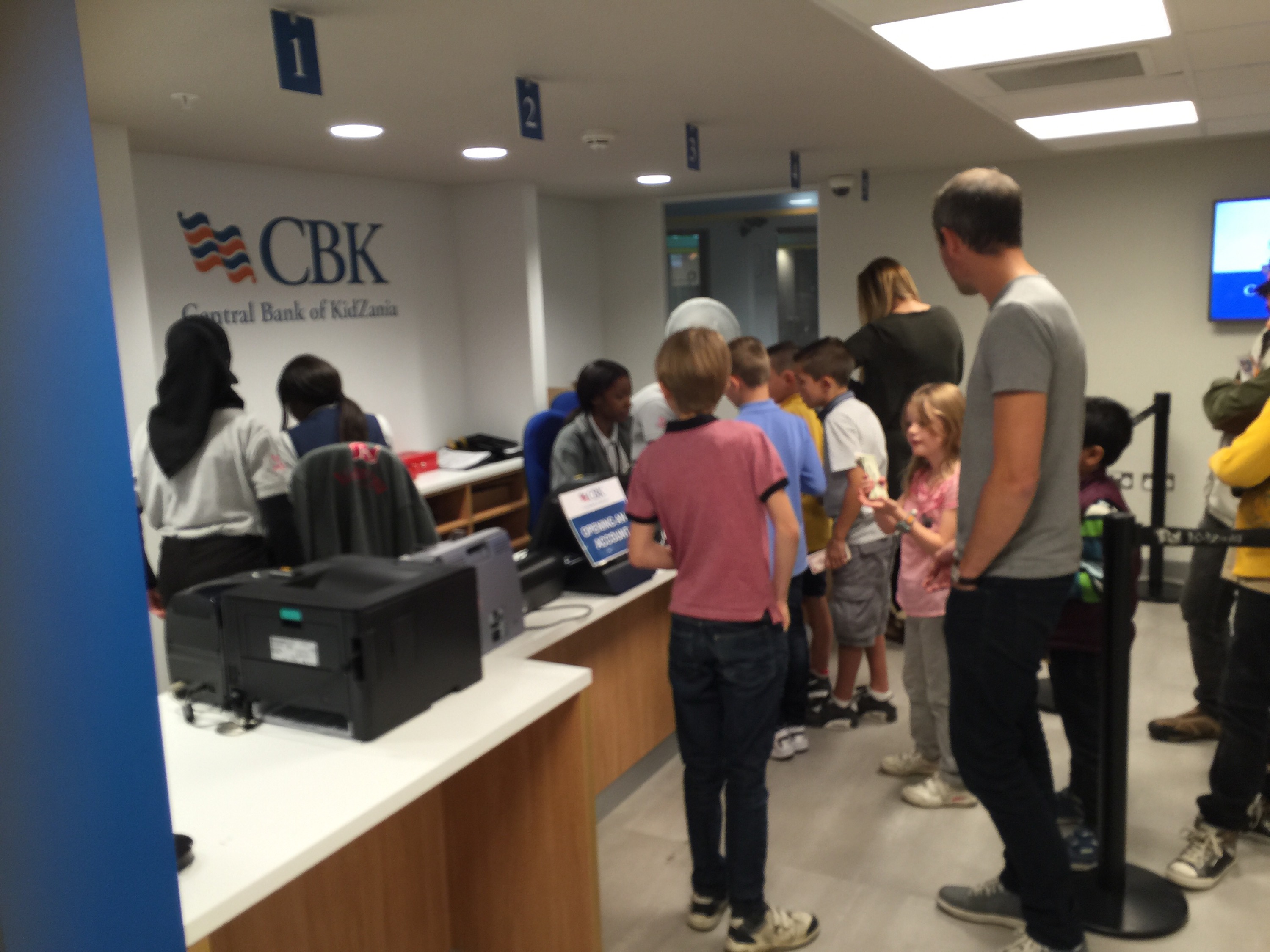
In a word no. At £150 for four adults and three kids, KidZania is too fucking expensive, no matter how well run the place is. And it is well run. A miniature imaginary town, a hive of activity where services operate smoothly amid a capitalist utopia, it seemed, on the surface to be every kids’ dream.

Here, everyone pitches in with the chance to earn money (the currency is called kidzos) doing less popular roles, like working in a recycling plant or maintenance servicing (a softplay network of pipes that runs behind the main facade) in order to pay to do more exciting things such as train to be an airline pilot for example, or get work experience in a chocolate factory. So in this sense, it’s more or less true to life – except for the glaring discrepancy that everyone has a fair shot, if they’re prepared to queue for it.
The queuing was a little trying. Most activities, from learning how to make ice creams, sponsored by Walls, where they received a sliver of the Mini Milk they made from various powders, in addition to their wages (full sized versions available for real money just outside, natch) to the aforementioned chocolate-making at Cadbury’s – likewise, a mere flake to sample, though not the bar of the same name, also available to purchase – to working in a clothes shop – sponsored, naturally by H & M (even the toilets were sponsored, I kid you not) were between ten and twenty minutes long, so there was a lot of waiting in line for the kids to take their turn- not to mention hanging around for the parents – and which, ironically, felt a little communist.
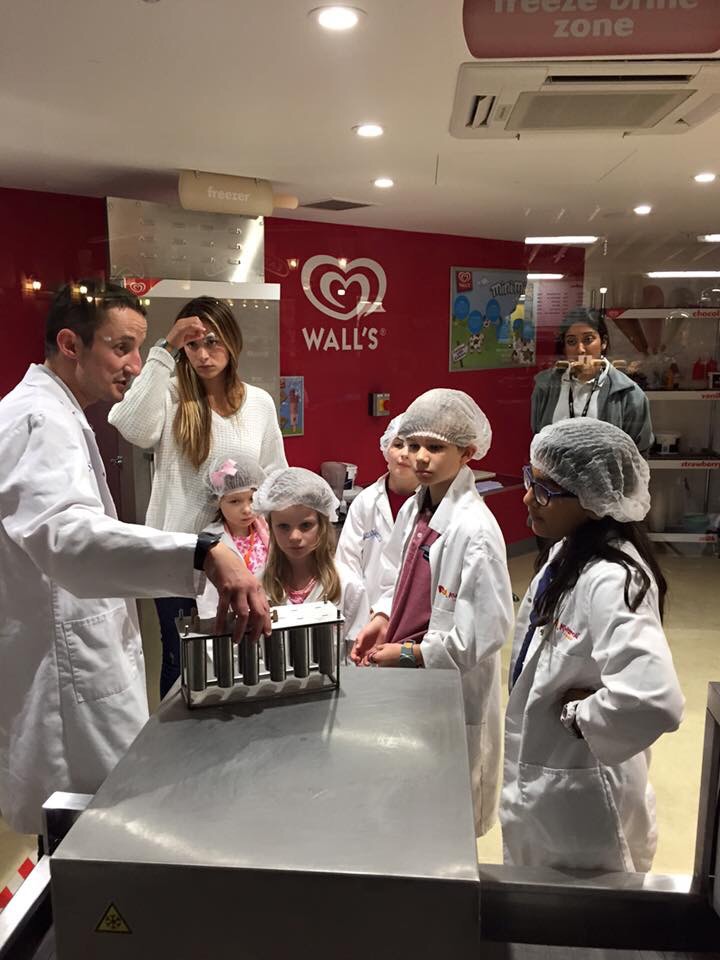
Queues were longer at popular activities, but actually, the services, where kids could earn wages couriering parcels, putting out a hotel fire with the fire service, or investigating it with the police – were by far the most fun – hardly anyone was queuing to service the air con, but it involved crawling around padded pipes, which the kids said was awesome. Likewise, learning to fly a plane, where Jonah looked a little put out as he struggled into his too small uniform, and donned a hairnet to avoid getting nits from his pilots’ hat.

Parents waited outside, while the kids received basic training before being ushered in to see the kids in action – the cabin crew (on an 8k – that’s kidzo – wage) performed safety instructions in a mock up plane so realistic Tom fooled Facebook friends that he was taking a holiday with my sister Katie’s other half John. Jonah and Ava landed us safely, paying 10k for the priveledge, while little Sammie, not quite 4, crashed and burned. As did her entire experience of Kidzania.
Four hours is a long time for a kid of four to not quite get a concept, and what with the queuing, and the fact parents aren’t allowed in to help their little ones – great for the oldies, but quite tough on someone small, my daughter was left a bit bewildered at first, then as she got in the swing of it, frustrated when well meaning older girls kept trying to “help” her. She was basically too young, which was an expensive mistake.
For parents of older kids, there’s a parents’ room – with expensive booze and free wifi – for them to while away the sessions, and you can even drop groups of 7s and over off for them to roam around themselves. This is what we should have done, leaving us free to enjoy the benefits of actual capitalism at the rather impressive temple to it, Westfield, where Kidzania is located. But a usual, I HADN’T READ THE SMALL PRINT, which left Tom and I hanging around, either queuing or waiting and feeling a little extraneous to proceedings, not to mention, after a beer in the parents’ room, and an unpleasantly sweet chicken burger (hello jam?) at the on-site GBK, sleepy, in the dim lighting – meant, apparently to replicate twilight, when children would normally be going to bed, rather than rampaging around the jobs market.
It was, in all, an interesting idea, one which, perhaps today’s (read my) pampered kids found slightly difficult to come to terms with, given the usual “day out” fare of organised fun and rollercoasters, places the onus of them to make what they could from it – which normally I’m all in favour of, but seems a bit rum when you’ve paid so much to do it. To be fair though, the experiences on offer were all run by enthusiastic staff who caught the kids’ imagination, and got them playing along. But four hours is also a long time to play pretend, and after a while, the kids got bored, fed up with queuing, while I got sick of having brand sponsorship rammed down my throat.
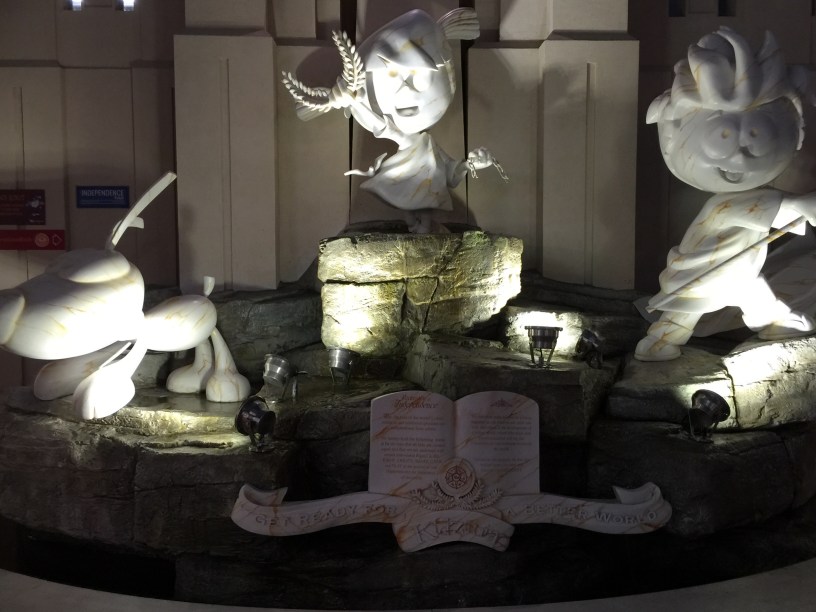
It is a novel – and brutal – concept, to get kids used to the golden handcuffs of capitalism – that in order to do what you like, you have to put in effort in things you might enjoy less. But it also felt like a piece of corporate propaganda we’d idiotically paid for the privilege of exposing our children to. “Achieve” was the Kidzania’s watchword, plastered on faux statues of animated kids with dead-eyed expressions; “get ready for a better world”, its tagline, one in which corporations hold all the power, and if you don’t do what’s ask of you, you get nothing in return.

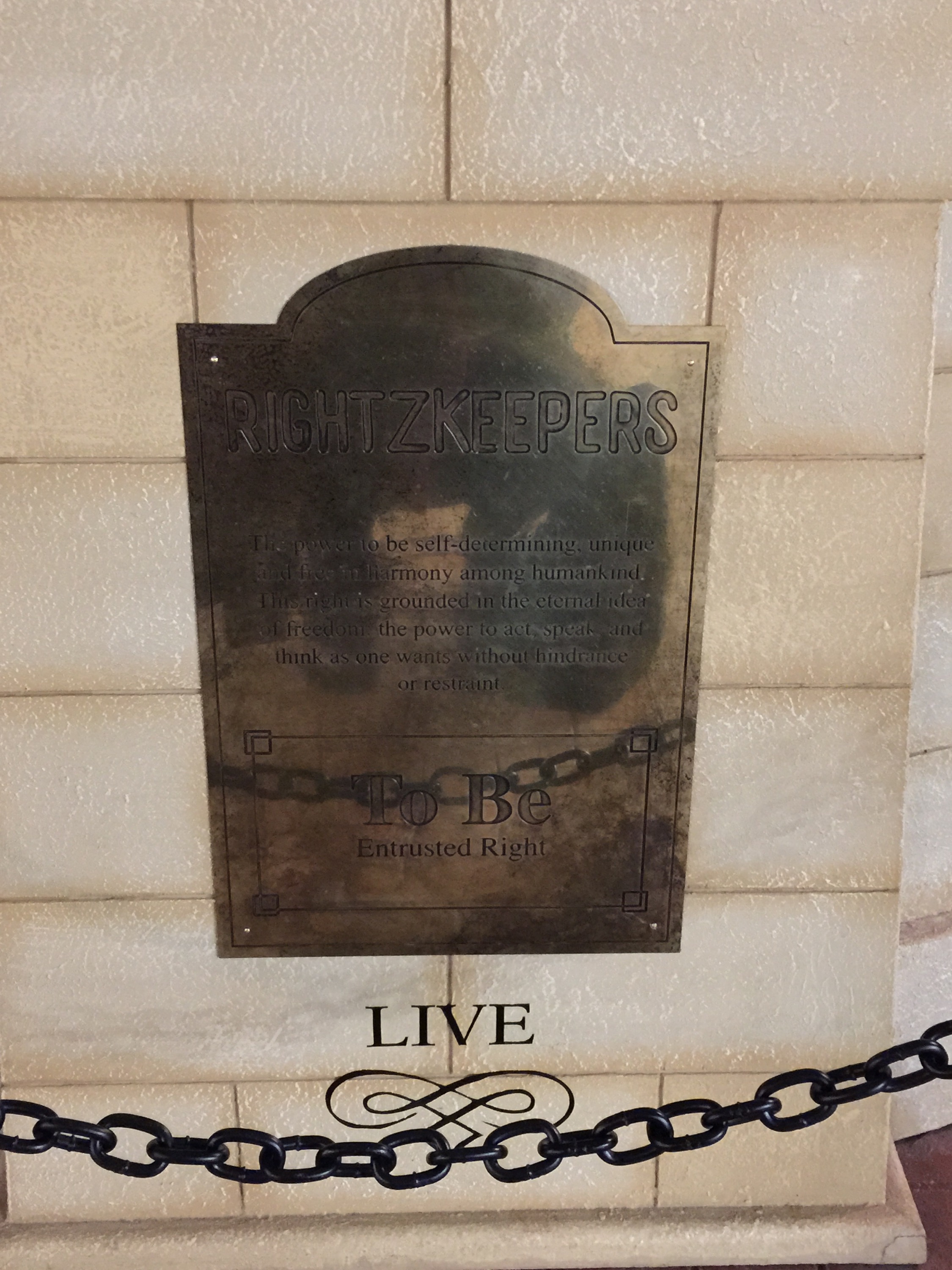
It made me bitterly chuckle that, amid its myriad proto political statements, one was about free speech, and self-determinism, promoting “the power to speak, act and think as one wants without hindrance or restraint”, which is, actually, when one thinks about it, exactly what the corporate world does not allow it’s employees at all. This was summed up for me by the (mainly minority) staff of adults, observed by a bemused audience of (mainly white) children, who once every half an hour were required to get up and dance and sing a hackneyed theme tune – a spectacle that made me realise, once again, that he who pays the piper not only calls the tune but can also make him dance like a fool.
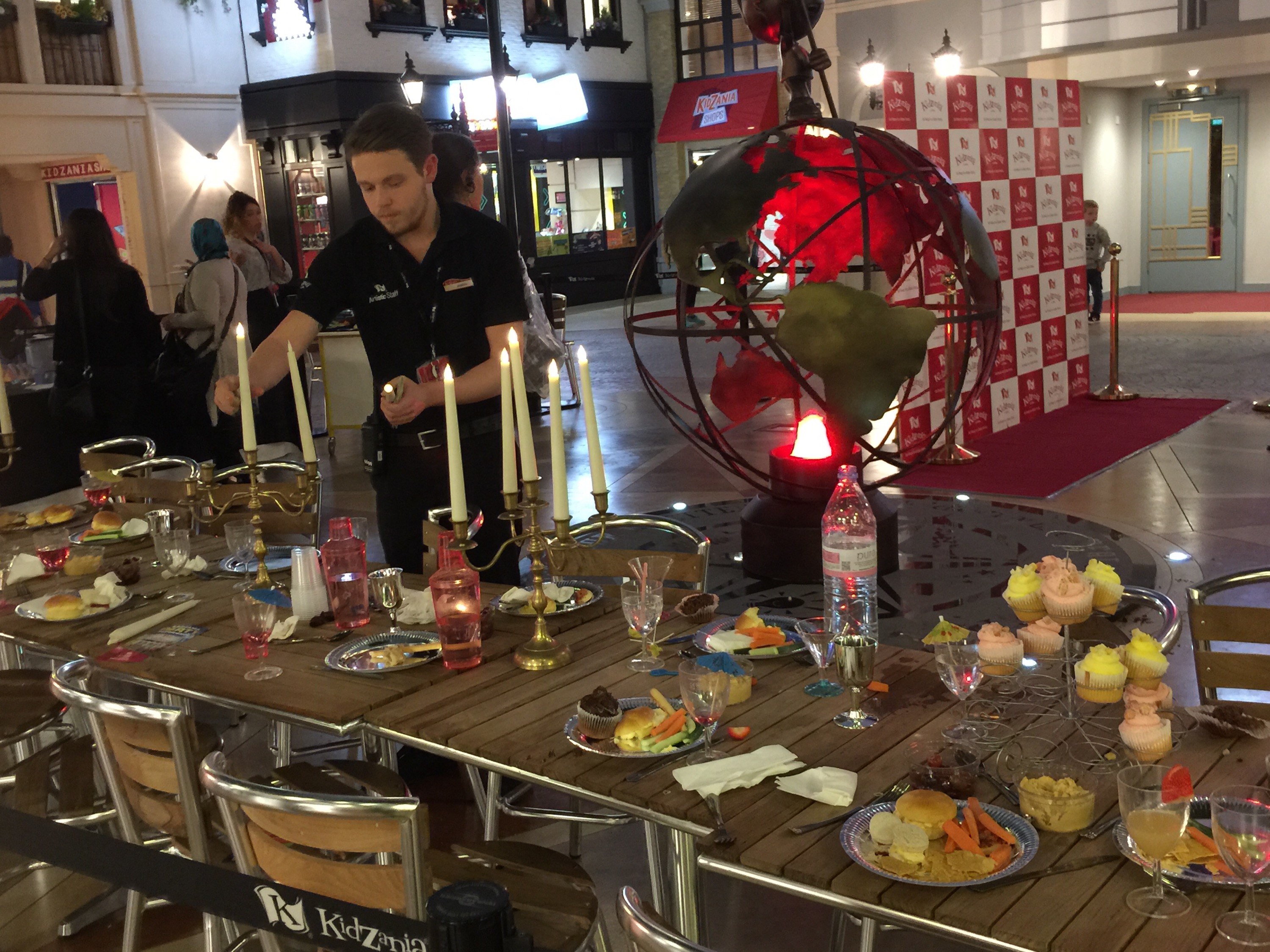
And if I felt a bit nauseated to have paid £150 quid to have this message rammed down my throat (I couldn’t bring myself to ask for my sister to pay me the 60 actual pounds I was owed for her daughter’s fairly muted experience) I pitied the poor father who’d shelled out over £350 to have his daughter’s party there, and the shocking waste of nutritionally devoid party fare scraped into plastic bin liners by an army of low paid workers.
But the sort of kids whose parents can afford to shell out on Kidzania will probably never have to swallow this fate, or realise this self-deterministic bullshit line they’re being fed is of a much value as the food in the rubbish bag – that it’s not just through effort or the will to achieve that you get to do what you want with your life, but it’s opportunities and networks beyond our control that actually determine your fate. But then, only the wealthy were allowed to open bank accounts here – you needed to have accumulated k75 to do so, and get a credit card, so at least, in this eutopia, the poor weren’t enslaved by debt like we are out in the real world. But then, in four hours, it would be hard to rack up that much anyway, given how long we all spent in queues.
Discover more from Looking at the little picture
Subscribe to get the latest posts sent to your email.

Hey Christina. Ollie Dearn from Grey here. I’ve had a read, and I hope you don’t mind me replying in a personal capacity. In the press release we put together for the launch of our space at KidZania, there’s a quote from Joel Cadbury, who’s the chairman of KidZania London. It begins ‘children can only aspire to what they know exists’. For me, that hits the nail on the head. I had to begin making choices regarding my future – picking which subjects to study at GCSE and which to avoid – at 13 years old. 13! I had no idea what I wanted to do when I grew up. Not a clue. I didn’t even know what the options were. I remember sitting at a parents’ evening being fed the pros and cons of picking geography over history, and vice versa. For some reason, I couldn’t pick both, despite wanting to. Anyway, I finished my GCSEs, and decided to continue in full-time education and study for my A levels. That was a choice made by default – I didn’t know, really, there were any other options. I had to narrow down my subjects even more, to just three. Still didn’t have a clue what I wanted to do. Still didn’t really know what kind of careers were out there, even less so what they entailed. Finished A levels, went to uni – again, more or less by default. Subjects narrowed down to one. Still didn’t know what I wanted to do! I did have a bit more of an idea what was out there by then, at least. I liked writing, and I liked sports, so I put two and two together and did sports journalism. Did I ever really want to become a sports journalist? I don’t think so. I certainly didn’t know then.
Anyway, I digress somewhat. My point is, I would have found an experience like KidZania extremely beneficial. I think it’s a brilliant concept – it’s gloriously fun, it’s educational, and it gives children a) some idea of what kind of jobs exist in the real world, and b) a top line understanding of what those jobs entail. I certainly never got that in school. Nothing even close to it, in fact. The only thing I got was a ‘careers advice’ session that entailed taking a test(!) and being recommended a job that best fitted your results. I can’t remember which job I was given, which is telling in its own right. But more to the point, why tell me I should have be a psychologist, or a journalist, or a photographer, or an accountant, or anything else, when I had literally no idea what those jobs actually involved anyway?
As someone who was frustrated by the lack of ‘real life’ education in the education system (I mean, I still remember bits of Pythagoras’ Theorem, but how many times have I used it since school? Zero, obviously! And yet I still don’t know how to do my taxes, or how mortgages really work, etcs), I think KidZania is a brilliant initiative.
Many thanks for your message- I appreciate you taking the time to read my blog and get in touch 🙂 And there are points you make I agree with. A concept like this for 13/14 year olds would, I agree, perhaps work better than one aimed at a younger demographic, who are much more likely to tell you, if you ask them what they want to be when they grow up, that they want to be a unicorn or a banana or whatever, than an ad exec.
Personally pushing brand rhetoric to younger kids just feels a little insidious, as a parent, who, though I work in the industry, tries to protect my kids from advertising. And in kidzania’s idealised version of the working world, the sometimes brutal realities of the marketplace are absent, except perhaps in the price- if you can afford it- internships, traineeships, university, the entry fee – you’re much more likely to get your foot in the door.
Anyhoo, rant over. It’s an acceptable, if overpriced day out. My kids quite enjoyed it, though I came out feeling dazed and ranty- not unlike how I feel after a day in the office.
I take your point about knowing what’s out there. But I’m not sure Kidzania offers a particularly realistic understanding of the working world- especially for kids who might want to be doctors or teachers or do something that doesn’t involve being mildly exploited by a global corporation- but perhaps that’s just my perspective?