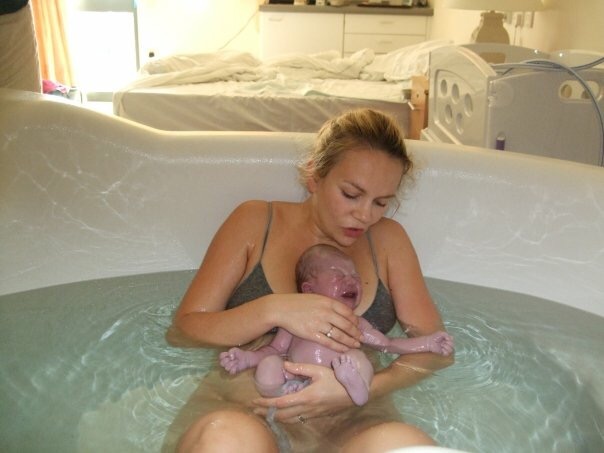
The government’s attempts to determine the cost of everything and the value of nothing according to the “rightness” of the market, mean that motherhood is consistently undervalued. Hence, western middle class women seem to have given u on having babies and I’m not surprised.
Considering my current work-based challenges – my age (35) and gender (female) is having a detrimental effect on my employability; the sometimes thankless task of stay-at-home mothering (my homemade fish pie of which I was so proud last week was enjoyed by absolutely no one but myself), means I’ve been considering what my value actually is as a mother (priceless, natch) to society, and how much I’d cost on the open market (for, if the government is right about something, it’s that you can quantify the price of everything.)
There was a blog that recently went viral in which a man worked out that he couldn’t afford his wife if he actually had to pay her for “services rendered” (childcare, cooking, shopping- he’d pay even more if he threw in sex and counselling, presumably). And what with my current state of professional insecurity, I feel there’s a point to be made that my value to society as a parent comes with a price tag attached too. It’s an argument I ineptly tried to make at a champagne-fuelled reunion with two old uni friends this weekend, which, while making me deeply uncomfortable about how much I was spending that evening, also made me feel fiercely defensive about how much my time spent simply being a mum is actually worth (for all it might not bring home much in cash).
There’s always a degree of unspoken professional rivalry among uni peers who graduate together: about what we are all doing now, and crucially, who is earning what: one of the friends I met up with is doing rather well in IT, and the other is a lawyer. When she mentioned, over cocktails, how her time is billed to clients – in six-minute increments apparently – and, perhaps rather resenting my stagnant professional status quo, I made the hackneyed point that if my time as a mother was valued more accurately by society it would be worth more than hers litigating for banks. She didn’t like that very much. And I was roundly shouted down by my IT geek friend, who has recently become a dad, who argued that 19 grand a year – the average nursery assistant’s wage – would pay for wall-to-wall childcare for a whole class of toddlers. Taking into account his wife’s salary and the cost of childcare fees, he argued, it only just about made financial sense for her to stay at home for any length of time.
But that’s too simplistic, I argued back, geed up on afternoon’s prosecco, half a bottle of wine and a Tom Collins. It’s not just about the loss of her salary and the myriad unpaid for tasks she might do around the home. With a gay couple I know recently having (acquiring? co-creating?) a baby through surrogacy, the value of renting someone’s womb and inseminating someone’s egg has a real life actual cost attached (whatever the ethical implications of this – and who am I to to judge?).
What about, I asked, the cost of her eggs if you were to sell them on the open market? You can’t sell your eggs in the UK, he rightly responded. But that doesn’t mean they don’t have a “nuts and bolts” value. Take the cost of a pint of breast milk (which can change hands for as much as £50 on eBay) and the long-term health implications of breastfeeding for mother and child (according to Jamie Oliver, this week, it reduces the mother’s chance of getting breast cancer by 50 percent) it surely adds up, not just to a massive saving for the NHS, Prime Minister, but places an astonishing value on the work I have done as a mum. Add to that the fact I had my children (at 24 and 27) relatively young, potentially passing on savings to society through a lack of complications or need for medical assistance.
Okay, said my dad friend (my ex-boyfriend, in fact, someone with whom I once considered a future having children together) – ever practical (he studied chemistry at uni). So you’ve provided two healthy children to society. So what? Millions of people do this every day. Do you feel you should actually get financially rewarded for your contribution?
Well, frankly, yes. I have given up a lot to become a mother (and don’t even get me started on whether or not this is my choice – regular readers will know my thoughts on free will (in a nutshell, I am biologically evolved to have children, and the fact that not everyone has them is more a comment on societal pressures than on their personal lifestyle decisions – which, in any event, will be determined by their genes and upbringing and so on, not to mention that pregnancy, by default, is not always planned). And yet it really bothers me that in the time my other friend has trained to be a lawyer and now can bill her time and give legal advice to clients at approximately £300 every six minutes, if ever I offer the smallest piece of (unpaid) and well meaning advice to a new parent (like to my sister who has a new baby who was breastfeeding for hours on end, to whom I suggested the baby should feed for no more than 25 minutes from the first breast and ten minutes from the second in order to get the right combination of fore and hind milk, to enable her milk stocks to replenish and avoid her baby using her as a dummy) it’s generally disregarded out of hand, as if the knowledge I accrued as a parent is, by and large, worthless. What the hell would I know? I’m just a mum.
I do know unwanted advice – however well meant – is really fucking annoying, especially where babies are concerned, but that’s not the point. My time as a mother is generally not valued: not by friends, not by my extended family and certainly not by the workforce which has at times been difficult to remain part of, despite ten years’ experience and several professional qualifications. My maternal efforts may be priceless to my immediate family, for all they may occasionally make me feel under-appreciated. Yet my efforts in terms of the net benefit to society is attributed no real value. Why?
My (ex-boy) friend is correct in saying that billions of people become parents; many millions of them to healthy children whose net worth to society is, presumably, uncountable. So, perhaps the fact so many women are willing to sacrifice so much for so little to become mothers means perhaps it is simply a question of numbers. As the Tories are so fond of reiterating, the market can’t be wrong. In an overpopulated world, scarcity value isn’t really an issue for women (unless you are in China). The result is that having a baby, these days, is increasingly viewed as a privilege: people having “more than their fair share” of children are scorned by society; publicly shamed by tabloids; while young mums are penalised through lower earnings potential for their whole lives (and compared to my uni peers who don’t have children or who are having them a decade later, I can personally attest to this fact).
People are warned (by Sir David Attenborough, among others) to “stop at two”, to do no more than replace ourselves to prevent further environmental toll from the rampant cost of human life. Babies, in modern society, are a liability, rather than a blessing. Kids cost you money (about 200k each, at last count, according to a rather scaremongering but probably nonetheless accurate article in the Daily Mail), where once upon a time, they would provide for your old age, time, sleep and sometimes, sanity. Why, as my lawyer friend, who is philosophically (she studied philosophy, after all) opposed to having children, would ask, would anyone put themselves through it?
It’s a good question, and one I would counter with, well, increasingly, they are not. Many post-industrialised societies, like Japan, Italy and increasingly the UK, are falling below replacement level, creating top heavy, aging societies making immigration a necessity , and in which said immigrants’ birth rates, once they become fully assimilated into their new societies, swiftly fall to the norm for that society. Population projections are falling. Modern life, it seems, is not all that amenable to parenthood. Particularly if you are not rich, as calculated in the creeping cost of childcare as a percentage of average income, the motherhood penalty and – the bellwether of societal wellbeing – growing rates of maternal suicide, featicide and depression.
And yet even my lawyer friend, who has for as long as I have known her, professed not to want children, confessed to me after several champagne cocktails that she wished it would kind of happen by accident so it removed her sense of agency from the whole process (she claims to be tokophobic). Having a baby is something most women just – possibly irrationally – want. And perhaps it’s this lack of logic that’s at the crux of why mothers have historically been undervalued by society. Like sex, nature provides women with a powerful hormonal incentive to have babies. Like an orgasm, we want them without really knowing why. It’s a biological fact that has enabled women to be exploited over time; our bodies appropriated and held hostage by the next generation under the guise of freedom of choice. It has made a pregnant woman the victim of the success of her own evolution.
Without mothers, none of us would exist. And yet, by many, particularly people with power over that woman (men, historically, but increasingly the workplace) babies are often seen as an inconvenience. But without us, there would be no men and no workers at all. What we do for nothing is invaluable. Our wombs hold the keys to the whole world and yet they simultaneously pull it from under us, through very real emotional, physical and actual costs of having a baby, making us (as increasingly I feel at the moment), worthless. If we had more power (as increasingly many of us are achieving) and womankind all went on (pregnancy) strike, we would soon get our dues for popping out the next generation. All we need to do is carry on having fewer babies and, until mechanical wombs become a thing, watch our intrinsic value rise.
But it won’t happen in my generation. Until population fall becomes untenable, babies will continue to get more expensive, and like the sugar tax, this cost is passed onto the end user: in this case, the parent and its coca-cola addicted child, rather than the corporation (state) who gets fat off the profits of its addictive sugary drink and the (future) workers who make it. At the moment, life might be cheap, but it ain’t for parents, especially those who outsource their children’s childhoods to underpaid nursery workers, and perhaps even more so for those that don’t.Yet it won’t stay that way forever. Not if women continue to vote with their feet, by finding work more meaningful than having children – and while bringing up baby may feel thankless, surely there are only a handful of jobs that truly count as this?
Historically people doing the most valuable work (farmers, nurses, carers) are underpaid because, like motherhood, almost anyone can do it. The beneficiaries of their labour: the corporations, the state, the rich – exploit people’s poverty, or worse, their compassion, by paying them little for what are quite unattractive jobs – clearing up piss and shit (ring a bell, parents?); working in the field. But desperate people will do anything to make a living. It’s a fact the Tories are flogging to death in their “principled” dismantling of the welfare state and simultaneous pandering to corporations that provide (often low-paid) jobs. The market, in all its hideous brutality, can’t be wrong. And yet the market is skewed in favour of power (capital) by a fiscal system that locks (labour) people into debt and our noses to the grindstone, just as women are enslaved into motherhood by our ovaries. It’s not fair. But then who said life was fair?
There is another way: wealth redistribution, a mandatory four-day week, free universal contraception… But the powers that be proclaim the nobility of labour, the aspiration of financial inequality, the privilege of parenthood through propaganda that keeps us working, entrenched and reproducing. And yet, there’s a clear and undisputed correlation between childhood poverty and a whole raft of negative life outcomes for individuals, and vitally, for society. So surely supporting mothers financially to do their job to their very best ability by giving them more power (ie. financial clout, which in turn gives them more options, and means, in the end, they are likely to have fewer babies) isn’t just good for individuals, it’s good for society. This is why child benefit was once introduced as a universal benefit – but in an increasingly competitive global economy our densely populated island cannot cope with the influx of people arriving here from countries without such benefits, to have their babies – at least, not yet.
So, it’s the increasing availability of contraception and decline in worldwide birthrates that might just help mothers become more valued. Because many of us are deciding having children is just not worth it. Giving life should be made fairer. The only way to do this is to stop doing it. Fewer babies equals fewer workers. Corporations stop profiting off our labour (and labours). Society grinds to a halt. Mothers get medals, and perhaps, eventually fiscal rewards (rather than merely fistulas). After all, the hand that rocks the cradle rules the world. Or at least, in an ideal world, it would.
And if I can write this with a massive hangover on the train home (on my cracked iPhone, I might add) – for all I might not be paid for it – just think what my children might be able to do in the future on a diet of (mainly) breastmilk (once upon a time – but if they were bottle fed, Jamie Oliver – as my mum rightly pointed out to me when I was getting a bee in my bonnet about my sister feeding formula to her premature baby, what’s best for the mum is probably best for the baby anyway) and homemade fish pie (made once in a blue moon, when I get round to cooking something from scratch on a weekday, for all they didn’t want to eat it), and (dare to dream) financial security, before you chase me back to the (increasingly precarious) workplace in order to generate tax revenue as one of your so called “hard working families”, Mr Cameron, for which I might add, we receive ever greater cuts in public services, particularly if, god forbid, you are a mother. But that’s just it. With kids, you reap what you sow. The investment you put in, especially early on, is worth so much more in the long run – if only the government had the foresight to value it.
In the decade since I wrote this article, some of my views have changed, but the sentiment has been proved hideously wrong – the powers that be are now so worried about a ‘baby-bust’ that they are upping paid childcare. It’s not enough. The cost of being a mother can never be repaid and more an more western women are realising this. It’s only now that western civilization (and the cost of supporting the elderly) is now literally under threat because birthrates have dropped below replacement level almost everywhere except sub Saharan Africa – that governments around the world are starting to panic and think of ‘too little, too late’ policies to try and increase the birth rate. I don’t want to say I told you so, but… I told you so.
Discover more from Looking at the little picture
Subscribe to get the latest posts sent to your email.

here here you are my superhero
but unfortunately you have the kids !! biology n all that !!
saw the film (pregnant arnie ) i would do that but only if ceserian delivery by eck ! there r limits !!
bill 🙂