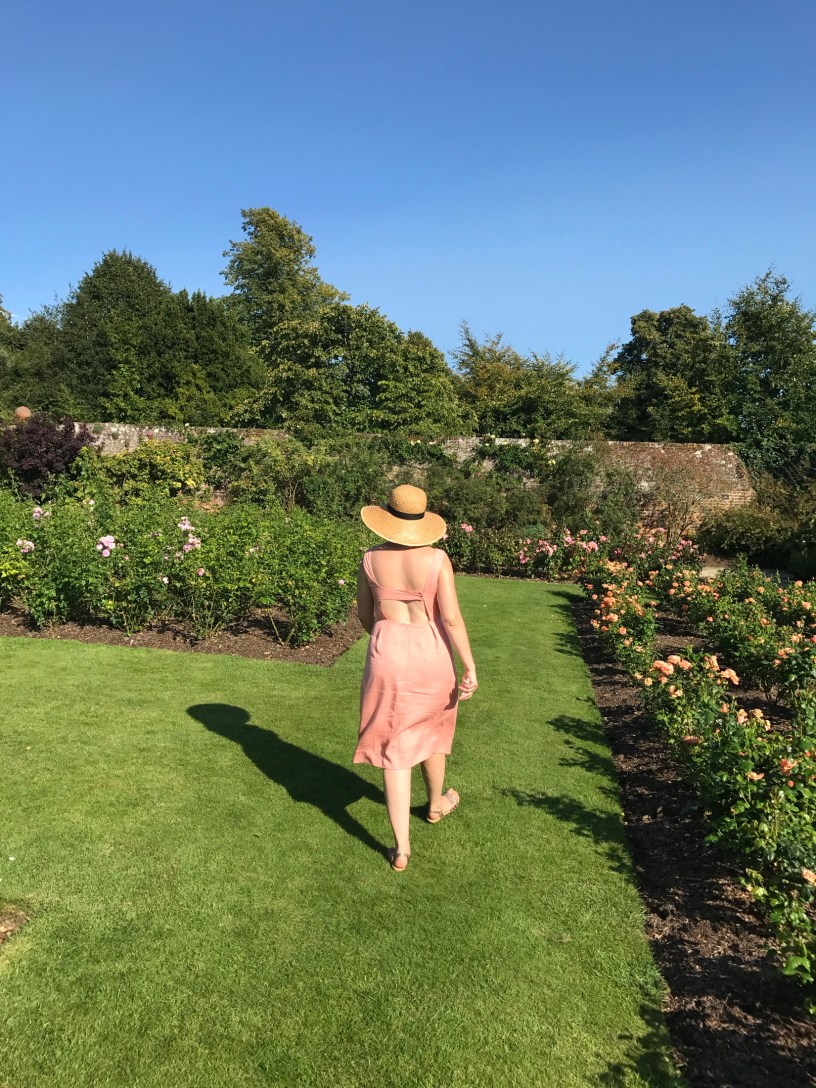
I’m sat on the M25, recovering from a party in pretty pocket of Surrey, at the home of one of Tom’s work colleagues, during a weekend spent celebrating ten years of marriage. This, ironically enough, follows one particularly vitriolic one where we finally conceded we need counselling to manage the build up of tension, resentments, isolation and miscommunication that can simmer under the picture perfect facade of a relationship that, most of the time, we present to the world.
Oh, it’s nothing serious, but intervention is better than a break up, especially when I have moments of genuine intolerance and spite, taking it out on the one person who will allow me to vent, when it feels as though there are so few others to turn to most of the time.
It’s life then, not necessarily one’s partner, that can become intolerable, when you’re on your fourth job change in as many years; when the sacrifices you’ve made for your family sometimes feel too hard to bear, and when you’re expected to concern yourself with technical challenges for which you feel evolutionarily ill equipped. It’s the fifteenth password request in succession, the unresponded to message, the group you thought liked you having fun without you on Facebook, a subtle slight from another mum in the park or an unmanaged expectation from an under pressure boss that causes one to explode – not the one who makes you tea with honey everyday because unlike most people, he actually cares. My marriage can feel like a lonely cocoon that keeps me safe but isolated, content but strangely discontented. And all around, the world is exploding in division and inequality and you’re expected to keep calm and carry on, and smile while you’re about it.
It’s hardly surprising we’re all so angry. The haves feel threatened by this pressure cooker of others’ need and want, and the have nots are becoming too numerous and too visible to ignore. A class war is threatening, and who can blame the dispossessed, when those with more power, like the banker whose seven bedroom home we just visited on the most stultifying day of the year, question whether the ignorant should vote in a democracy that’s, in any case, a sham designed to flip flop around and uphold the status quo: appeasing the masses, all the while forcing them to account for their own ‘choices’, which are, of course, the result of global forces beyond their control. It takes only great tragedy to force us to look at ourselves in the face and recognise our own part to play.
The 70 or so people who liked my Facebook status, celebrating the achievement of sticking with a man who stuck by me when the people who should have didn’t, is a case in point. How many of them have we seen since our special day? A handful, and only a very few with any regularity. Out of sight is out of mind, and with all of us living in our own pressure cooker of modern life, it’s hardly surprising that most of us don’t have much time for others, especially those whose problems- unsolvable in any meaningful sense- cause them discomfort- as their own reactions to them can.
So we plough on in the knowledge that everyone’s suffering- the man in his seven bedroom house, feeling entitled, though angry when comparing himself to peers who have achieved more, thanks, as well, largely to forces beyond their control- to those isolated in high rises who’ve only found community spirit through great tragedy. The fact is no one really cares about anyone else, till it reflects well on them, which is why, in fact, I have less cynicism about Theresa May’s measured response to Grenfell than Corbyn’s hand’s on approach. After all, he has more to gain from solidarity.
But the short-termism inherent in free market economics has come back to bite May much more than her inability to emote with a group of people she has long ignored: the flotsam and jetsam of global capitalism, the disenfranchised, the (in the ironic words of George Osborne’s Evening Standard), dispossessed. Trying to counter an argument levied by a drunk Conservative with a Harvard Business Degree about the state of the nation, I pulled on Keynesian economics to prop up my theory that society will eat itself if we don’t make it fairer and more equal. Given we were both half cut, I think he was impressed (indeed his qualifications seemed to qualify my argument, despite the fact that his were made boorish and unfathomable by wine.)
But none of this means anything amid the forces of globalisation, where May and her ilk (who I genuinely believed were having the electorate on with their regressive talk of grammar school reprisals and core voter alienating fuel payment withdrawal- which, I note, now they have quelled the hard line brexiteers by failing to win a majority, are no longer on the agenda) are powerless compared to multinationals and tax havens and where a perfect storm of overpopulation and environmental catastrophe threatens to overwhelm civilisation as we know it. The little pocket of chocolate box Surrey in which we stayed, with its blooming roses and lush blowsy common, its overpriced restaurants, houses, overvalued commuters and green belt protests, felt like it was at the end of its day, the forces of globalisation pushing, zombie apocalypse- like at the fringes of its village perfection. How much longer can England sustain the inequality it represents, when just a few miles as the crow flies, (whatever distance the perpetually gridlocked M25 may make it feel) people are burning to death because of greed, anonymity, and policies that put short term profit over poor people’s safety.
I’m not going to pretend I have the answers to anything- not global economics nor the secret to a happy marriage. But there is a bitter sweetness in enjoying such a perfect weekend amid so much imperfection and unhappiness, but at the very least it gives us something to strive for, whilst also throwing into sharp relief that this type of life- a charming, if gentrified village community, is available only to a shrinking minority. But then, it’s harder still to enjoy it knowing many of the rest live in unsafe tower blocks. Especially knowing the vultures are already circling, planning their attack on blocks across the city, to create an excuse to pull down the old and build shiny new housing that will further engineer the poor away from prime real estate. Because to the people that matter (i.e. those with any real power) most of us are only worth the price we can afford to pay for it.
I’m just glad my own value is recognised by a partner who loves me despite myself, and the fact I’m a rapidly depreciating asset, for all he sometimes bears the brunt of our modern stresses and strains. I worry that for the people of Grenfell, it took great tragedy to wake up to the fact that it’s inhabitants lives were worth anything. Which says something about the rest of us but what’s the answer to that in a rapidly overpopulating and fragmenting world is too big a question for little old me.
Discover more from Looking at the little picture
Subscribe to get the latest posts sent to your email.
