
Food is the protest of last resort. Faced with misjustice, ill-treatment or simply losing the will to live, food, or the lack thereof, wields more power than the apparently more potent last protest of the helpless. It’s a protest we’re, sadly, all too aware of. The hunger strikes of Guanatano Bay inmates, or anyone with a bone to pick but not much else, are legend – and the remedy – force feeding like foie gras ducks, perhaps among the more shameful episodes in humanity’s bleak history of power and submission.
But what when it’s our daughters (for it is mainly girls, though increasing numbers of boys) who follow this particular line of thinking, who decide, for whatever reason, to shun their meals? Watching Louis Theroux on Anorexia yesterday, following young and not-so-young women through their daily battles to get, and keep food down one thought struck me, that even here, it all boils down to power.
When all was said and done, these women may not have had much – indeed, many were sectioned, unable to leave except on a doctor’s say so after an undignified series of examinations and weighings which to my mind felt invasive in an age where women’s bodies are still scrutinised, policed and abused, no matter how powerful, privileged or empowered you might be. But the one thing these women could control (in a way many of us struggle) was their weight.
Many of the women exhibited autistic traits. A toxic mix of conscientiousness, unhealthy obsessions, societal pressures and childhood experiences was the poisonous brew from which full-blown anorexia – which is the main cause of death from all mental health illnesses- developed. Reedy voices (the flat intonation common to people on the spectrum), point blank rudeness (I actually loved the British Asian girl who, far from being submissive with her covered hair, had refused an arranged marriage – and in a further assertion of control over her body stopped eating in protest, tore down Theroux’s faux naivety by throwing the questions back in his face (How is your banana drink? It’s just banana drink) and spirals of anxiety upon eating were common.
Yet, far from being image conscious, most of these women were aware of how tragic their lives had become. One 60 year old, whose whole life revolved around food restriction, was only marginally resigned to (marginal) middle-aged weight gain. Another 27 year old, whose once beautiful face now resembled, sorry to say, a pickled skeleton, had missed the best years of her life to this terrible disease and knew it. I feared- we viewers were meant to- that she would lose what was left of it too.
Even the director of the mental health unit they were incarcerated in pointed to the problem of institutionalisation for anorexics who are taken into care. Having missed out on so many of their key life stages – having relationships with people other than food, university, careers, many had nothing to go back to and struggled out in the real world. There was even, perhaps implied, a degree of complicity in the teams who monitored, assessed and, dare I say, controlled these terribly sick women- everyone justifying their existence through this dreadful disease. It was painful to watch.
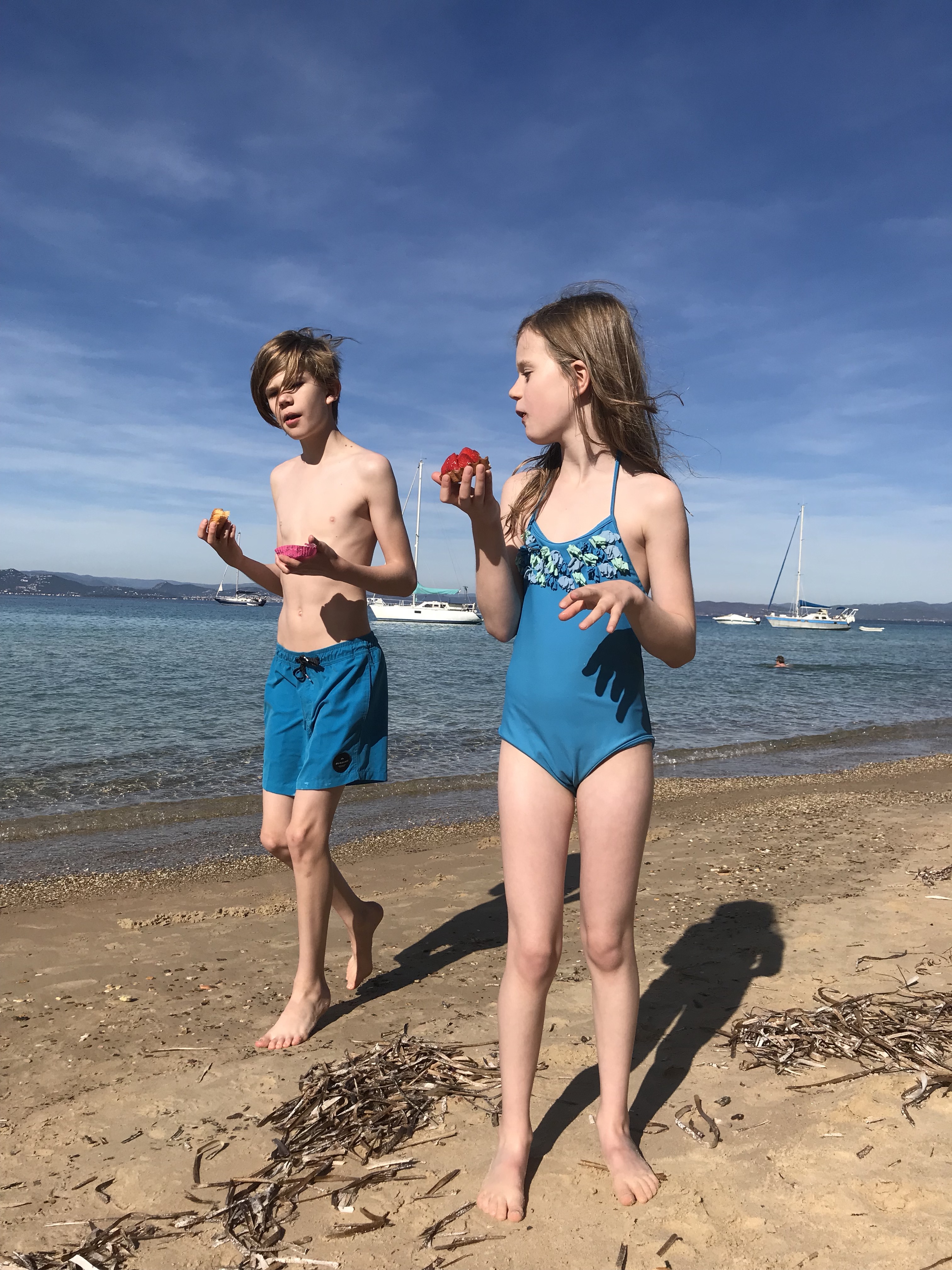
But for me, it was also timely. A week away in the south of France, where children’s menus feature an uninspiring trio of nuggets, steak hache or pate au beurre (spaghetti with butter), I began to nag my children to eat the scattering of leaves on their plates for fear of scurvy setting in. They barely saw nor ate a vegetable all week. But, like so many things with my children, the more I nagged, the more they dug their heels in against my wishes – and particularly, I’ve noticed of late, 9-year old Ava.
She has form with stubbornness. A history of shoe-based traumas (caused, in part, by me foolishly buying shoes of various sizes in the sale when we were broke, and then, keen to capitalise on my investment, coaxing her to wear them when, perhaps, they weren’t quite the right size) has caused meltdowns over transitioning between pairs. Given I myself have triggers on leaving the house from stressful mornings of my own in childhood, getting out the door is one of my flashpoints – with a series of overscrutinous mangers clock watching my arrival into the workplace- has often caused me to lose my rag when shoe-time occurs.
The behaviour is now entrenched. I do not forsee a time where she will ever wear stilettos, sandals, indeed anything other than a Clarks shoe, or whatever brand she has currently grown attached to. This upsets me as I myself have been known, patriarchal victim that I am, to torture myself in unsuitable footwear and can’t conceive of a lifetime spent in flats, but perhaps, after all she is right not to bother. She’ll certainly save a fortune wearing her one pair of shoes to death.
But it’s illustrative of what could also, god forbid, happen with food. One thing I’ve learned with my children is that if something is a battleground, if I give a show of force, they’re unlikely to back down, and so my modus operandi throughout much of their childhood has been to pick my battles wisely and then, softly softly catchy monkey.
This programme reminded me of why food should never NEVER become a battle for my daughter. She’s picky enough already – eshuing strong flavours, weird textures, homemade juices, soggy cereal and now, it seems vegetables.
Last night, on presenting her with a colourful plate of chicken and chorizo stew, she began a familiar process of turning her nose up at tastes, textures and smells. I signalled to my husband (via the medium of a severing motion to the neck), who’d also watched the programme with me, not to make a fuss. In fact, I employed the regime I used to unpick behavioural issues with my son. Blanking. Every time she moaned about her food, we ignored her. She picked, picked a bit more and then left her plate mostly untouched. Later, when sniffing around for pudding, we calmly said there wouldn’t be any- rewarding her for not eating dinner would not be happening either, but this would also not cause any fuss. Her shoulders sagged in a sigh of resignation. She got grumpy later – we offered her milk (NOO THANK YOUUU), and off she went to bed. To be fair, I knew she’d had a cheese sandwich at afterschool club and a packet of crisps. She would be fine. But keeping her refusal to eat foods low key, is, I’m hoping, the key to averting a food nightmare later on.
Because food is power when you haven’t got much else. I myself have flirted with eating disorder, like many women of my temperament. I was pretty successful (if you want to call it that) at one stage, shedding half my body weight and sliding easily in the coveted (if you believe women’s magazines) size zero. What I wanted was attention, the positive kind often somewhat lacking during my own childhood. Like the dinner lady who coaxed me to eat one more chippy while I steadfastly refused, and the stepmother who asked my what I’d eaten daily and got the dinner ladies at school to check my plate and a father who used to weigh me before going holiday with my mother to check I hadn’t lost any weight. I only shied away from counting calories because I was rubbish at mental arithmetic. My daughter is not.
 But, in my 20s and 30s my parents’ attention was elsewhere; my kids needed proper meals, so I decided, in the end, I couldn’t be bothered with all the accompanying misery and martyrdom and gave it up. I am now a comfortable size 12 who occasionally frets over excess bulges and can tend to be a bit neurotic about my appearance (I had fat freezing this summer) When the pill helped me gain 5 pounds, I exercised ferociously, to little avail, so in the end I just accepted it and carried on enjoying my food. Oh well!
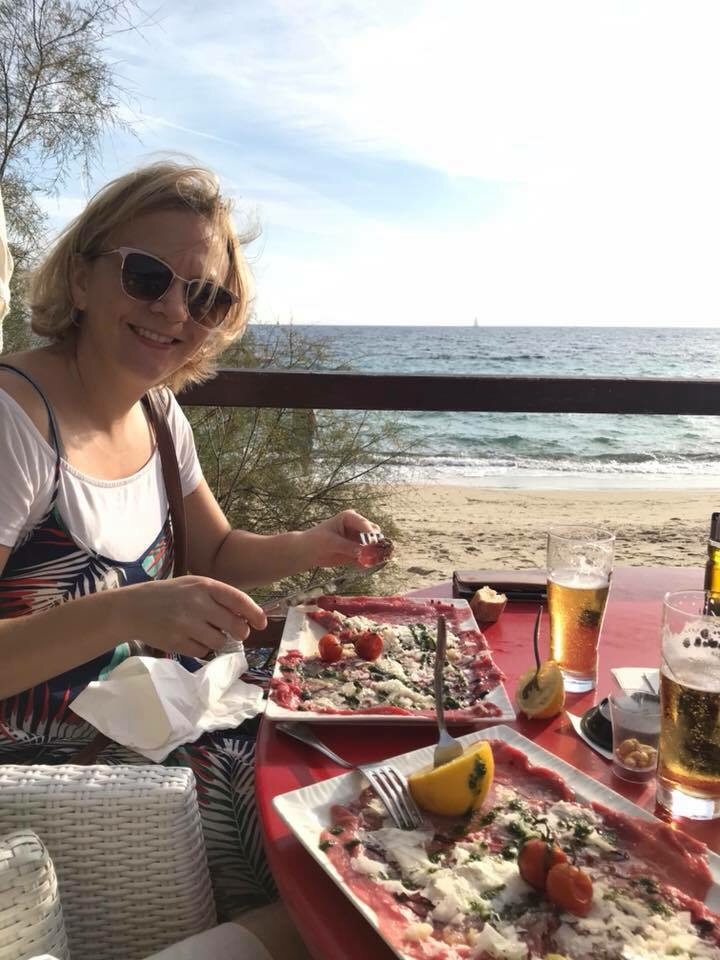
But I can still be fairly orthorexic in my habits to this day, and I have to tell myself it’s ok to have a beer, or a cake ever so often. It’s a trait – with its focus on healthy eating to the point of neurosis, that could backfire spectacularly with my children. I realised I need to stop nagging Jonah about sweets (he’s starting to get spotty and spend his pocket money unwisely )- but he also does four or five hours of climbing training a week and has a six pack to put Peter Andre’s to shame. He too has starting worrying about pecs and posing in the mirror. But he eats well despite being in the 2nd percentile weight for height. Already, he’s officially underweight.
But it’s with my daughter that I have to be particularly careful – never criticising, never moaning, but most of all, ignoring her own food gripes while encouraging her when she eats positively. In the end, fighting about food not a battle worth having because it’s one parents are doomed to lose. It’s her body. She needs to learn to look after it herself, without my interference or judgement. It’s not easy when you tend to be fairly judgemental about yourself. But the alternative is too bleak even to bear thinking about- a living nightmare of unhelpful obsession that drives too many women to uncomfortable lives- and an early grave.
Discover more from Looking at the little picture
Subscribe to get the latest posts sent to your email.
