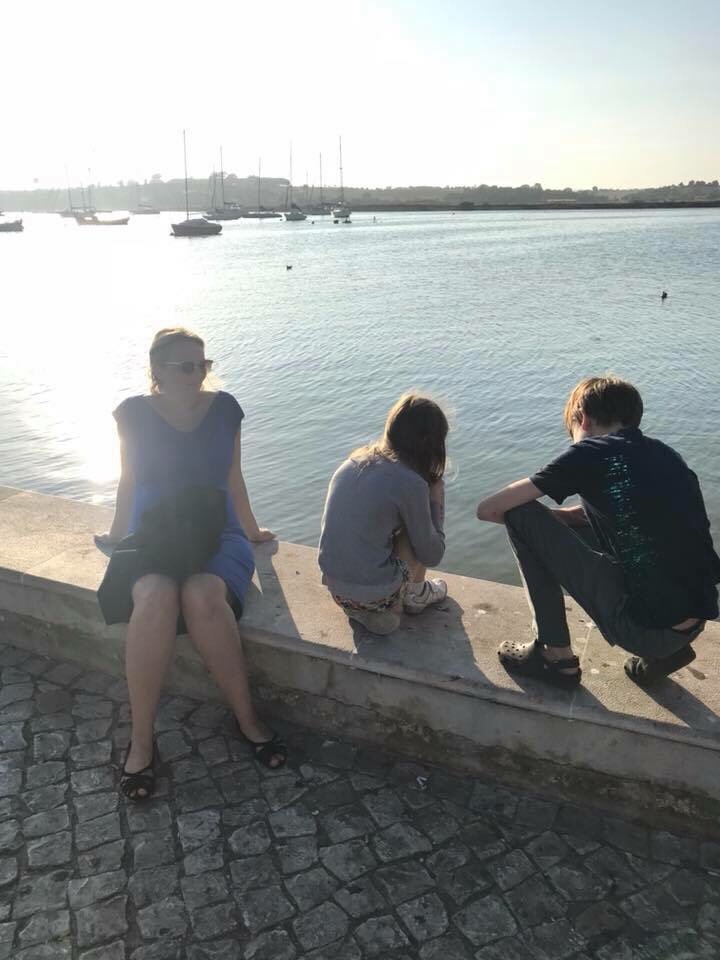
Witnessing the fallout of Eurozone boom and bust has been a draw out affair, beginning in the early 90s, when my step-father raged against overdevelopment around the Portuguese haven we’d bought into during the timeshare frenzy of the same period. The holiday apartment by the coral cliff edges and cobalt skies of the Algarve coast doubled in size, and similar- though less charming- blocks were thrown up around it, dwarfing its rather quaint charm in a sea of high rise modernity.
Still, this place remained a childhood dream of freedom- though adult tyranny lurked in my stepfather’s drunken spats with my mother and occasional outbursts at me. Mostly though, my sister and I escaped underwater, scoping every inch of the pool; hopping over the scorching sand to the Atlantic chill beyond. Here we felt normal, forming gangs with sun scorched kids and later, fledgling romances, skin clearing up in salty water amid unwise tans, hair bleaching ultraviolet in the sun.
There was something in the perfection of the place that appealed to my sense of order even then- whitewashed walls framed with yellow accents, matching towels, sun beds; Dark-eyed staff who pinched my cheek, made beds with tight, starched corners, and mopped sand from floors, appeased the glimmerings of my teenaged OCD in freshly pressed towels, wearing neatly pressed shirts sporting the local rocky outcrop – featured large in an overblown mural in the pastel-shaded dining room- my first glimpse of quasi-fine dining, all diagonal glasses of varying shapes and cutlery petering to a point.
It was only returning later, with children of my own, when the aged laundress from my childhood flickered with tired recognition, that I myself recognised that her own vacations in the intervening decade may have been fewer on the ground. It was amid this growing awareness of my own privilege that the cracks began to show in this Algarvian idyll- the overdevelopment already crumbling in the economy crash that occurred since.
Appearances had been kept up but with economies- sunbeds were now crushed round a pool that felt too small for the number of guests; staff, now temporary and thinner on the ground seemed overworked, grumpy, unwilling to help. A simmering resentment now greeted my Anglo Saxon appearance and little wonder? The locals who once greeted us as the saviour of their economy were now to blame for its ruin.
The poverty which I’d seen alleviated, over ten years of holidays l, in the small fishing port, was back but worse. Empty buildings stood derelict, with little hope of rescue. Only the tourist traps were booming: places which had once been cheap and charming were now overpriced and garish. Finding something authentic was a challenge, and our old haunts- the little Piti Piti place up the mountains, had been within an inch of being burned in mountain fires; the owners, suddenly elderly, saw little hope of being bought out, though the food was as delicious as always.
Down the mountain, at the little spa resort of Caldash de Monchique, ex-Priminister David Cameron’s house had been spared a roasting, but the village, which only two years ago seemed impossibly well-heeled, with exclusive resort hotels popping up to serve expensive health tourists, looked tired, yet far more expensive still than the mountain bolt hole we’d once escaped to on cloudy days for donkey rides and orange crepes.
It was a recurring theme. Everything was more costly (to our beleaguered Brexit pockets) yet not quite as lovely as once it had been. Blame Brexit if you like, but, having read the Greek ex Priminister Yanis Varkouris’ And the Weak suffer as they must, last time I came, I realise that divorcing from Europe is the only sensible option unless we are to suffer the same fate. Like cutting off our body so our head might survive (albeit artificially propped up by tech and finance) it’s bitter medicine, but no less necessary.
It is then, the last days of Europe, and whether the seat of civilisation will ever return to anything like it’s former glory, history offers a sobering lesson. But invest in it we must- for in an age devoid of industry, Europe has only its history to sell- and as the balance of power shifts eastwards, it’s what the clambering, picture-taking tourists want.
Europeans may no longer be able to flock to its own backdoor except in pursuit of ever dwindling work opportunities, but there will always be a market for terracotta pots and floral-tiled faded grandeur, unless it slips too far from our grasp. Unless it’s rescued soon, all that will be there for the Asian crowds of the future will be the ruins we westerners latterly paid pittance to trample over on our holidays, over there.
It’s a pity we don’t learn a bit more from the Thais or the Vietnamese about how western tourism has affected their economies and their culture for good and for bad, because one thing’s for sure, Eastern tourism is coming- the number of Asian brides snapping wedding cliches on London’s Millennium Bridge is testament to that- and we won’t be able to reject the hand that feeds us when it does, however we may like the consequences.
Discover more from Looking at the little picture
Subscribe to get the latest posts sent to your email.
