
This one may be most relevant to the East London massive (I live in Bow, for the avoidance of doubt, but I can assure you, my accent is cut glass, despite a cockney ancestry stretching back to the 1500s).
For lurkers and observers from elsewhere (I see you in my stats, I know where y’all are from), take from this the following. For neurodiverse boys, coaching is everything. I repeat EVERYTHING.
For those who did not know, Jonah, my son and the original subject of this blog, was diagnosed ASD is about 2012, around the time I started writing about our journey. He is now 20 and a GB squad climber. He’s also very private so I won’t give any more details than that. He has an insta profile: I dare you to go and find him.
To say our journey from A to B was challenging is an understatement. To think for one second I had that much to do with it is vanity. For Jonah, coaching is what transformed him from a difficult, angry child prone to meltdown and thunderous faces to a charming and successful man with an optimistic outlook and a bright future.
We’re lucky enough to live close to Mile End Climbing Wall and it is they who I credit with his transformation. Climbing became Jonah’s hyperfixation, and he has taken it all the way to international comps, but the coaches – and I won’t name names, but you know who you are, had the patience, dedication and tenacity to stick with him through that transformation. Whether it was anxiety about his fear of heights, or simply getting him to focus through the boring stuff, these guys are local heroes and they do not get enough credit for the hope and opportunities to offer kids who might fail in other aspects of their lives.

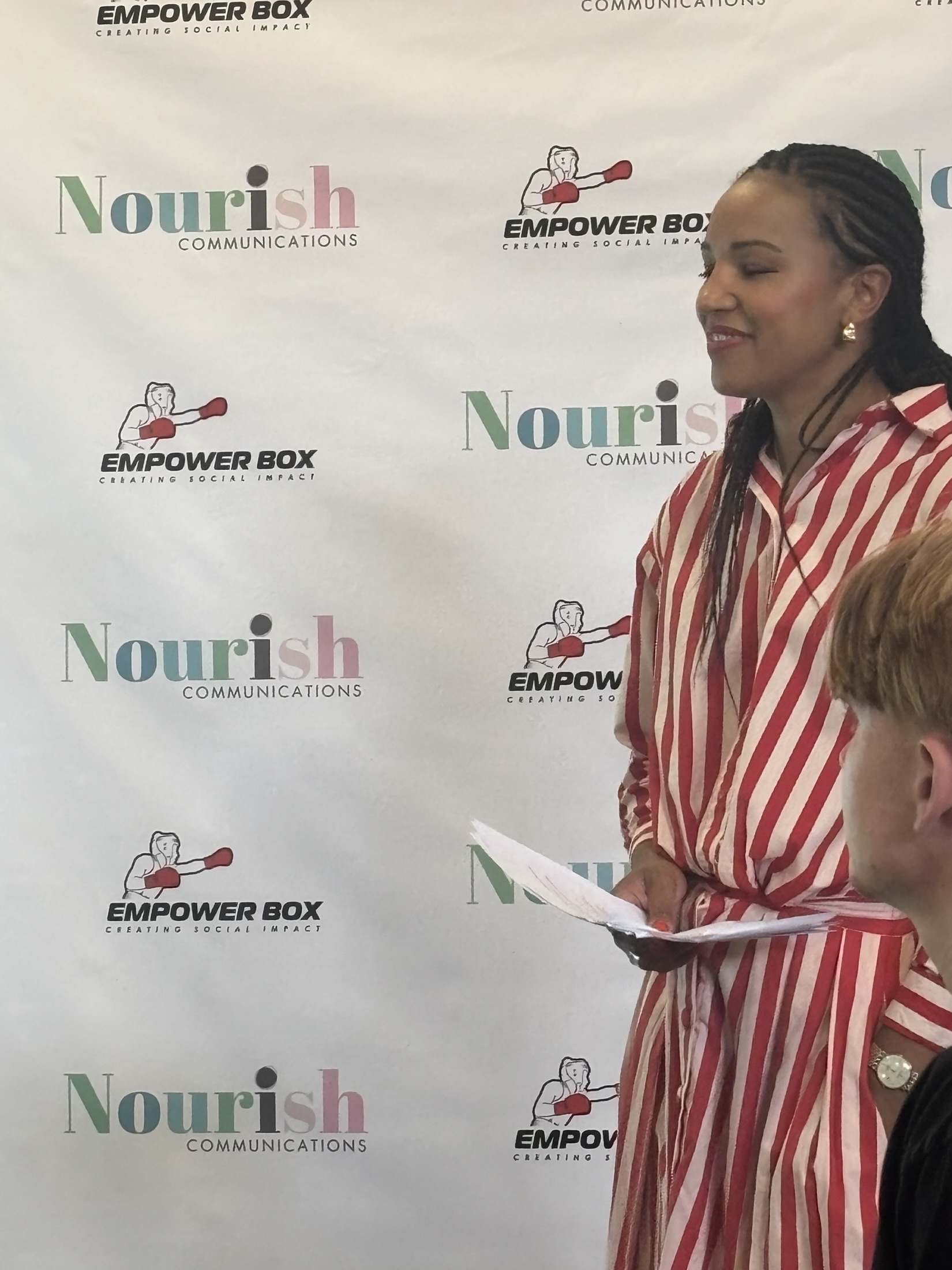
Last night, I had the opportunity to attend a local business networking event run by a friend of mine who attended the same journalism school. It was a joint affair to publicise her business, Nourish Communications, (which I’m hoping will help with my own transformation from personal to pro blogger) and another friend of mine, the pro boxer Valerian Spicer’s new venture, Empower Box, which aims to implement boxing programmes into schools with a view to improving young, often disadvantaged kids’ mental health and wellbeing.
I know first hand how important it is for kids to have a ‘pathway’ to success and I do believe sport is a great way to achieve the sense of focus in all young people, especially those with neurodiversity as they tend to be the most vulnerable to falling down society’s cracks.
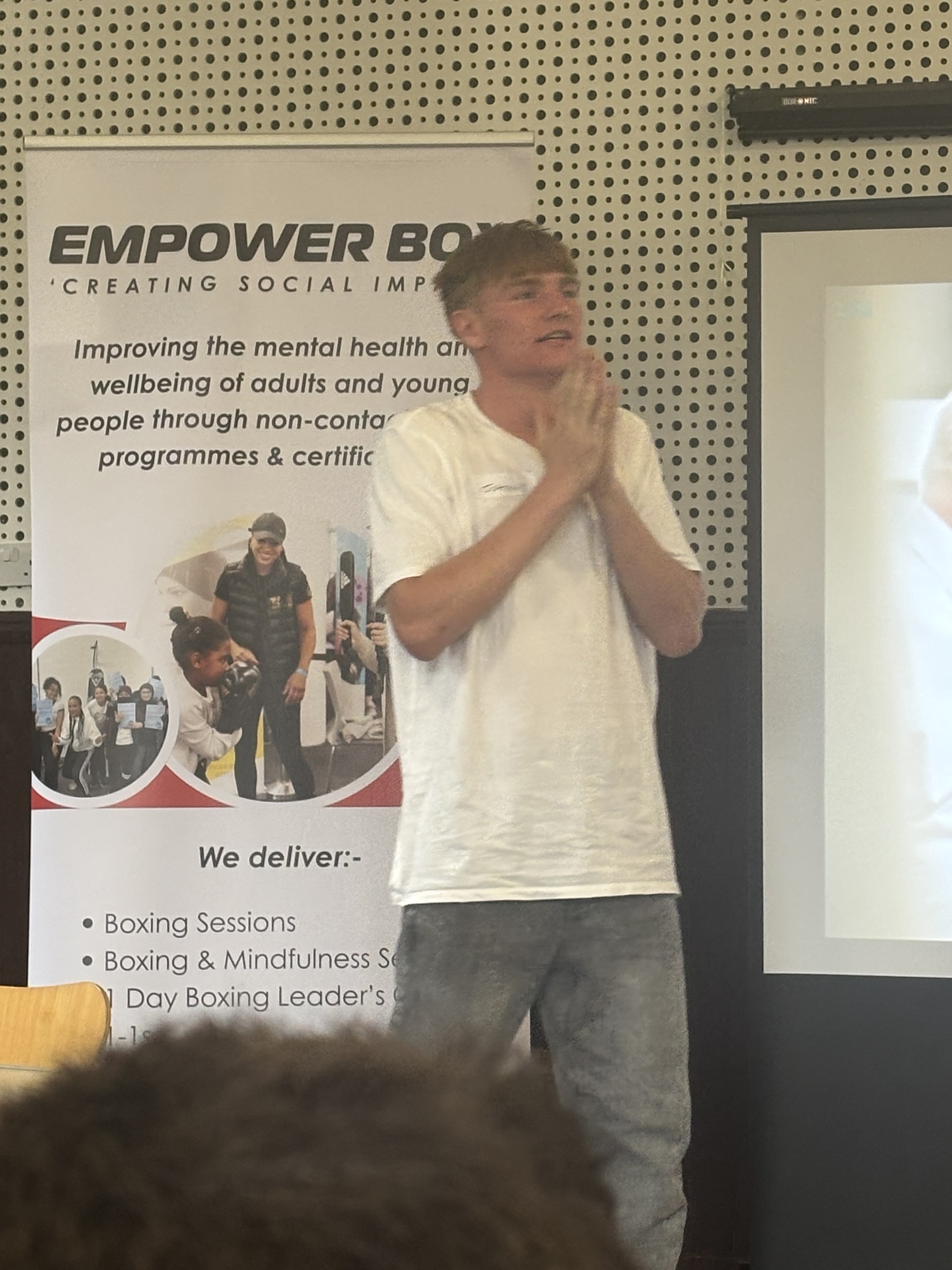
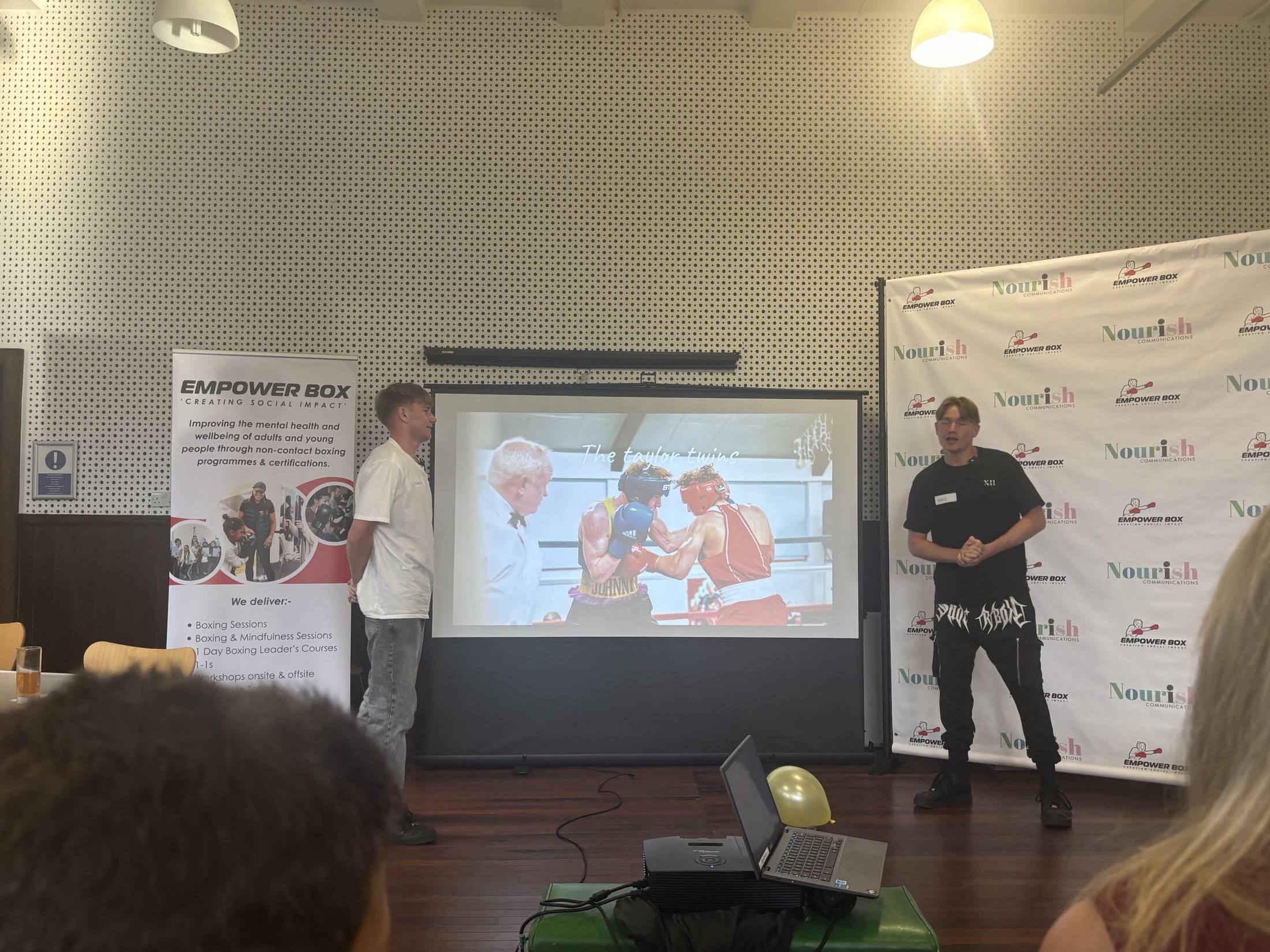

As part of the event, I had the absolute pleasure to meet the Taylor Twins, young competition boxers, training in East London, but originally from Banbury near Oxford, whose story resounded with me. Their circumstances are those of relative disadvantage – they were open about coming from the travelling community and at one time being homeless. The pathway they are now on may lead them to be at the same Olympics for which my own son is aiming.
Their energy, drive, enthusiasm and sheer cheeky joie de vivre was such a pleasure to behold. It reinforced the sense that people like Valerian and many of the small business owners supporting other local people are such key community figures, especially for kids who might otherwise fall down the cracks – the twins mentioned their father had been in prison for much of their young lives.
The event, which took place in Bromley by Bow Centre, itself a hub for local disadvantaged people touched by poverty and homelessness, brought so many people together hoping to solve local problems from the ground up.
As I know all too well, Bow, and it’s surrounding areas has historically been one of London’s poorest, most deprived areas, being as it is to the East of the Thames, whose effluence flowed downriver past the City, through Shoreditch and into Tower Hamlets, so named, for my global readers, because of the Tower of London, which sits on the backs to the west of the borough. My forefathers were Thames Lightermen, which means they carried people across the river, a livery company with some prestige, not unlike black cabbies today (who are themselves seeing their livelihoods eradicated in this age of digital apps and untapped immigration.)
I like to joke that I am plague-proof, because Christ only knows what my ancestors survived, but survive they did until the First World War saw many of them killed or emigrate to Canada, from where my mother arrived in the early 70s, to begin an ill-fated relationship with my Kentish/Norwegian father, himself a product of chance and the flotsam and jetsom of humanities’ woes. His own father was the product of a Chatham good time girl – there were plenty, because of the docks – and a Norwegian sea captain, allegedly. These traits are so stamped and embedded into my genes that the auDHD I’ve finally been diagnosed with points much to the struggles and victories of my feckless and fearless ancestry.
Enough about my struggles. The point is that to change the course of history takes local heroes, working tirelessly to take those fearless and feckless genes and turn them into something good and positive Without them, the cracks would widen and society as a whole would struggle even more than it is already, in this time of immigration and social change on an unprecedented scale. We need to support these guys to help us help our kids have better and more productive lives.
So, a massive shout out to anyone I met at the event – I’ve tried to hook up with as many of you as possible on Insta and LinkedIn. Feel free to add your details in the comments to help spread the word about your services – I do have global reach (although small!). It’s only by supporting the most disadvantaged that society can thrive, something which global capitalism would do well to recognise a bit more, so to the investors in the room, a round of applause too. We need you to invest in a young people, not just those who might net you a profit on the world sporting stage.
Follow me on YouTube, X and Tumblr and @Reprobatemum on Facebook and Insta
Discover more from Looking at the little picture
Subscribe to get the latest posts sent to your email.
