Yesterday, I half watched the Channel 4 documentary Born Naughty, which questions whether children with behaviour problems need a diagnosis or simply better discipline. As a mum with a child diagnosed on the autism spectrum this is a particularly emotive issue for me.
I spent years wondering about my son’s behaviour as a toddler, while soul searching to see what I may have been doing to contribute to it. For him, ticking the characteristic boxes for ASD by lining up toys, walking on tiptoes, having epic tantrums and obsessional, tangential one-sided conversations, in the end, I felt it was going to be helpful for us both that I pursued a diagnosis – in part to absolve myself of the worry and guilt that I was in some way to blame, and in part, to give him a sign to hold up so that he was not labelled naughty as he went out into the wider world.
This was a heart wrenching, complicated process and one I do not regret. I felt enormous relief (not unlike Honey’s mother on the program, who you accused of accessing a diagnosis for extra benefits) when he finally was given a diagnosis of moderate autism, labelled until recently Asperger’s. I can tell you for a fact, there has been no funding forthcoming for my son. However, while his behaviour can still be challenging, I do not doubt that the way I have parented him has had both a positive and negative effect. I try to learn from my mistakes and I feel that overall, we’ve done a pretty good job under circumstances that are always, and unremittingly more difficult than that of the average parent.
There is always a balance to be struck between finding out if there’s a problem, and questioning what you can be doing better as a a parent. None of us is perfect, and most of us are on a steep learning curve. That’s why, rather than watch the program fully, I was also keeping half an eye on Twitter, to see the trolls and smugs come out of hiding, many of whom do not have children, or have neurotypical children and therefore think they are qualified to judge. Believe me, having raised one of both, I can tell you the difference between a child with ASD is inordinate.
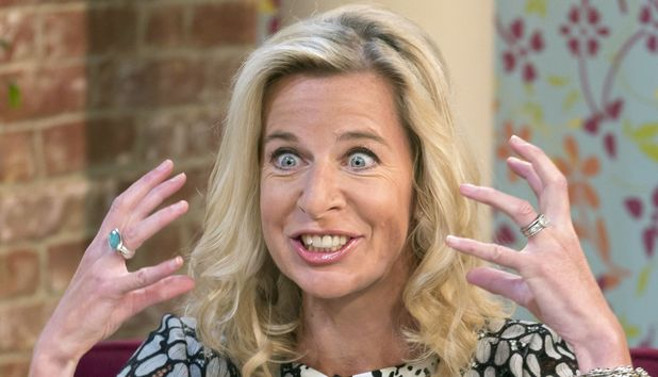
In particular, but predictably, leading the band of trolls was sociopath-for-hire Katie Hopkins, whose tweeting diatribe on the program extended to mocking a disabled child’s weight, and slandering the parent of the child, who had just been given a diagnosis (pathological demand avoidance) by suggesting that a whole world of funding has opened up to her, and linking to her own ill-considered opinion piece on the Huff Post, questioning why everything must be a medical condition.
Well, I can tell you why everything needs to be a medical condition, Katie. Because there is no other way of categorising the vast gulf of child psychology and behavioural challenges at the moment other than to medicalise them, without blaming the child and the parents for said behaviour, because that is unhelpful and simply compounds the problems.
On the behaviour spectrum, there are, unfortunately always going to become children who have greater challenges than others, and some parents who are better equipped to deal with those challenges. To be able to better understand these challenges, we’ve had to recognise that some people are simply wired differently, and the only way we have of doing this, is to medically categorise them.
It’s not a perfect system – nothing ever is, but it sure beats just calling children naughty, blaming them and their parents for their problems (remember refrigerator mother syndrome?) and brutalising children with corporal punishment, hey? And if it is a parenting problem, rather than an actual, diagnosable condition, then parents need support recognising and helping to solve the problems they have created rather than castigation for their poor life choices. Believe me, no parent wants to deal with a child with behavioural problems, even if they can’t recognise where their parenting might have contributed to them.
The fact is, modern life is tough on kids, and tough on parents. More and more of us are falling down social cracks without (real life) social networks to support us, as we might have had in the past. It’s sad, but it is a fact. Medicalising behaviour is our one chance of getting these problems dealt with before they become entrenched and create wider social problems in the future. And those that fail to see this must themselves consider whether their own myopia and judgement – if it’s not just ignorance – might qualify them for a place of the psychopathy scale.
The recognition that people can’t help the way they are is vital towards nurturing compassion, understanding, and most importantly help for people whose behaviour is in some way socially unacceptable. And that’s why, Katie, I want to reach out to you today, to help you recognise where you may be going wrong, because although you can’t see it, your behaviour is every bit as unpleasant and socially unacceptable as any of the children featured on last night’s show. The difference is, you’re paid for it- which in this day and age seems to be an excuse for institutionalised, socially unacceptable adult behaviour of every kind.
Discover more from Looking at the little picture
Subscribe to get the latest posts sent to your email.

What an articulate letter. You’re so right about the woman being a sociopath and I’m going to quote you on that as I recently wrote quite a bit about that subject in regard to my ex-h. I’m so sorry you’re so awfully offended and hope this gets to her somehow. #MBPW
Thanks for your comments. I think basically I believe most of the time none of us can help the way we are, her as much as the rest of us, so perhaps we all need a bit more compassion, but it’s hard when someone has so much more power and whose views can be so damaging!
I relate to this SO much so well written
Agree with Anya above, an excellent letter covering the positives and negatives of diagnosis. That woman is vile, she is incapable of joining a discussion without the need to have the last word, to always be right and superior. She takes it to the next level with her attacks on those least able to defend themselves. A true narcissist.
Should have added I found this post via #MBPW 🙂
Thanks!
Thanks for this. Glad you see my point of view 🙂