
Fear’s stalked my summer like a malignant shadow. It began, innocuously enough, on a Wednesday afternoon. It was hot and I was sat in the garden after school pick up.
I rang my step-mum, Jane for a natter. She’d been getting very anxious – over silly things, really – the roadworks on the stretch of motorway near her home had shrunk her little world, the traffic queues in the Blackwall meant she had long stopped to visit us in East London. I wanted to tell her that the new Silvertown toll had all but cleared the queues. I was longing for her to visit, to see our extension, cuddle the cat, the baby… that’s how long it’s been since she last visited. Lana is now nearly 7.
Between Lana and work – a frenetic financial services job where I just couldn’t seem to do enough to make anyone happy – I’d been calling a bit less. When I lost that job, I couldn’t bring myself to tell her the bad news and had waited a couple of months until I’d got a lawyer before calling Jane to let her know I’d have a bit more free time to see her.
Before I started that job, I’d had a premonition dream that I should go for a coffee with Jane, that it might be the last coffee we’d go for, and I’d woken with a sudden appreciation of how much I’d enjoyed our coffees in the past, the ones at Bluewater with the kids, in the kitchen of the house my father bought her when he dumped her for the Korean woman he met on a business trip, the ones we’d had as teenagers in the fancy arcade in the town where I grew up.
I’d met her shortly afterwards in that arcade, which had once been the epitome of market town glamour, all glass and terracotta tiles, fancy lettering and the rich scent of arabica beans cloying with baskets of pot pourri. That was the 90s. It was a different time.
As a litmus of the state of the nation, the coffee shop in which I’d envisaged meeting her for a cherry pastry, as we’d always enjoyed in our youth, was no more. Instead, a ground floor coffee bar served the overweight elderly in mobility vehicles. Upstairs, where the coffee bar once stood, was a kids’ playcentre, of the variety where toddlers could play pretend with mini shopping trolleys and fake food. I would later spend a rather aimless hour there tidying its shelves with a then 3-year-old Lana.
Jane and I commiserated each other on the state of the arcade, the state of the town, the state of the nation, but Jane herself seemed more or less her old self, sensible, if anxious; a little hand wringing, penny pinching but otherwise kind and understanding. She’d always been an ear for my teenage woes, understanding deeply what it was to be rejected, again and again until you’d become a little afraid of who you might be if you let yourself out too much. Then, I’d gloated at the sudden windfall afforded by my new corporate job, warning her I’d have my head down – a new start, a chance to prove myself all over again. She smiled wryly but didn’t offer any platitudes. The Queen had just died and nothing could be taken for granted anymore.
The time before (or was it after?- my own memory seems to have taken a turn for the worse), in Rochester – oh yes, it was during Covid, for there’s a picture of me in a blue hat and a facemask – we’d left it too long and she mentioned that she had felt depressed. This was not like Jane, proponent of, if not a stiff upper lip, then at least, an ‘it’ll all be alright in the morning’. I’d given her a massive hug – the rules were cruel and she was my mum. She was my mum. She really was – mine and my sister Katie, who herself would spend the next two years recovering from long Covid/ menopause/midlife crisis.
Anyway, that Wednesday afternoon near the end of term, things were looking up. I’d settled with work, started a business, Tom had a new job. I had good things to say, so I rang her and got her sister, Hilda.
Oh Juliet, she said (for that is my name, or at least it was when I was a dancer and, so I’m using it for the purposes of this blog – all names are changed to protect, as it were, the guilty), I’m glad you’ve rung. Jane’s not well.
And that’s how it began. A worried phone call – delusions, not eating, lost a lot of weight. Jane managed a few words to me, but her voice was thick and muffled. She wasn’t her usual, sensible self at all.
Was it some kind of anxiety spiral? Hilda didn’t know but she was waiting for an ambulance, and my own thoughts began to circle.
I Googled, as I am wont when I don’t know what else to do, with a bottle of red and an illicit cigarette. I had my suspicions. An Uncle on Tom’s side had gotten ill, sliding from anxiety to falls to dementia to death in what felt like a matter of months. But that’s normal in your late 70s, isn’t it? Is it? Jane is still only 72.
In Switzerland, this summer -a trip to celebrate Tom’s gardening leave – the end of Jonah’s childhood and a chance to climb somewhere truly magic – a friend from the climbing scene mentioned in passing he wasn’t allowed to give blood in Europe. BSE, he shrugged. God, I haven’t thought about that in years, i’d thought. Not since the 90s.
I remember it well, the lurid headlines, the mass slaughter of raging cattle, the warning that disease with a funny name had a progression that could be decades – 50 years and we were all DOOOOOMED. No one really knew what to expect but according to the newspapers we were all going to die! The totting up of all the times we’d gone to McDonalds, or eaten spaghetti bolognese, or meatballs. My Dad, himself a ‘big picture thinker’ had been grave at the time. But like the rest of us, he forgot about it and got on with his life. After the Millennium, a life without us.
I wonder, I’d thought, consulting doctor Google: Fast moving dementia. Personality changes. Falls. Tick tick tick. Death. There’s only one way out of CJD, or rather the variant form caused by feeding cattle to cattle – yes really. Whoever thought THAT would be a good idea, to feed ruminants their own kind?!?
I wonder. I continued to wonder and then here was Jane, falling into a fast moving dementia. I visited her in hospital. She was laid on her back, drawn and thirsty, unable to swallow. Tick. Like a child. Tick. she was anxious that the fruits and flowers I’d brought in weren’t allowed. Take it all home, she kept on saying. Take the nice things home. She seemed to be in a state of abject despair. But she was talking at least, her voice still thick and muffled. I gave her fluids: coconut water, chicken broth. She protested before each sip but drank deeply. I dunked digestive biscuits (her favourite) in a sippy cup of tea and fed her the mush, tenderly wiping her mouth where she’d be horrified to realise a whisker grew. I implored the nurses to feed her. I told them, desperately, that she wasn’t old. This wasn’t ‘normal’. The young girl tasked with caring for the desperate cases in the beds around her, looked at me blankly.
I returned a few days later, having sounded the alarm to friends and family, and become a world-class expert in prion diseases. Jane was stiffer, but being fed rice pudding by a kindly lady, whom Jane would later tell me in slurred and fuzzy tones, had hurt her eye when washing her. I wiped her face with baby wipes and applied nice cream to her hands. she was on fluids now and not as thirsty. it transpired she got to level three kidney failure and was on antibiotics for a kidney infection. Encephalitis, swelling on the brain was suspected, and my own stood down. There was a rational explanation for all this. The fearmongering of my youth was just that. I could relax and go on holiday.
My girls came to say goodbye to a lady who had always, every year put a tenner in each of their birthday cards, never once forgetting, her handwriting, as familiar as sweet tea heralding her good wishes at Christmas every year.
She was freshened up by then, I’d cleaned her teeth and sprayed deodorant, combed though the mats of still thick hair that once fell down her back to her bottom, the dark-haired princess nursery nurse who rescued my father when my mum left, entertained us with hand puppets, and brought us up as her own.
Where Jane had croaked at me, she smiled at them and asked questions in her muffled voice. We left happier, and I thanked the girls for going, concerned how it may play out over our fortnight away. That night, my sister, Katie came en route to the hospital. That night, we got stupid drunk. Cracked out the drawer of stuff you should never touch, especially on a school night, and smoked cigarettes like naughty school girls, outside on my patio. In the morning, Tom was cross. It’s Lana’s last day at school. Sort yourself out, he said. I met an old friend for lunch, still hanging from the night before, and slept in bed all afternoon. I made it to Lana’s piano recital with a guilty head, and only had a sip of the small glass of Prosecco proffered by her sweet piano teacher.
Two weeks in Spain came and went. Hilda gave us detailed updates on a Whatsapp group. Encephalitis was ruled out. Four people with Jane’s presentation were diagnosed with CJD, the consultant had told her. A lumbar puncture would reveal more.
Katie picked me up on the Saturday after, and we drove together. I’m glad we went together. When we arrived, Jane was bolt upright, feeding herself beef stew (the irony!) and carrots with jerky motions and a fixed, dilated stare. She didn’t say a word to us, but her legs jerked up and down as if she was scared. We sat on either side of the cramped hospital bed, and stroked her arm, administering pillows, and massages, creams and wipes, plumping and combing her like a queen. She started, jerked her legs and uttered a single word. ‘Frightened’.
I wrote a strongly worded email to the ward matron, copying in the national prion clinic, requesting anti anxiety meds for Jane, and leaving with Katie, honestly devastated. I woke in the night and howled. By now, Hilda was on the same page. On the Whatsapp there was mention of hospices, wills and other practicalities. I told her I would visit again in a few days, afraid that Jane would no longer recognise us.
My mind went down the dark path, that the thing they told us would happen in the 90s was happening, and if it was happening to Jane, could it also happen to us? I wrote a detailed email to the National Prion Clinic and downed a bottle of pinot noir; this week’s reccie trip up North to check out Jonah’s uni accommodation, like my two week-holiday in Menorca, stained by the shadow hell of Jane’s potential diagnosis.
And then Hilda’s tone changed: from fondly concerned to irritated, irate. She’d visited Jane. Had missed her train updating us. She didn’t want Jane being treated like she was dying if she was not. She didn’t want Jane being treated with CJD if she did not have it. I told her about the word Jane had uttered and that we were all on the same team. We were all under an immense amount of stress.
And then, yesterday, after a lunch with my journalism professor and health jouro friend to discuss Jane’s case, another update. Jane was smiling, joking. Despite the fact vCJD can only be confidently diagnosed by autopsy, there was no sign of prion disease, according the team in charge of Jane’s care. She’d been put on sertraline and discharged to psychiatry.
I was delighted. How could I not be, and yet, I’m still unconvinced. Could this be deathbed lucidity, a well-known facet of end of life dementia, where a previously moribund patient perks up, is more like their old self, seems miraculously improved, but death follows shortly afterwards?
I don’t wish to be morbid. I feel quite strongly that cautious Jane, with her sensible lifestyle, is owed ten more healthy years, free from the prison of anxiety that has sent her in concentric circles to a place where no one it seems can reach her. At least with vCJD, there was a clear explanation for the glazed stare, agitated limbs, lack of interaction and hollow terror that I witnessed on our last visit. But I am very glad that the heralded BSE apocalypse is not yet with us. For now.
But having had my entire summer spent in the seven circles of personal distress and worst-case-scenario-coming-true thinking, I sure as hell would like to know what IS going on with my beloved, very very unwicked, stepmother.
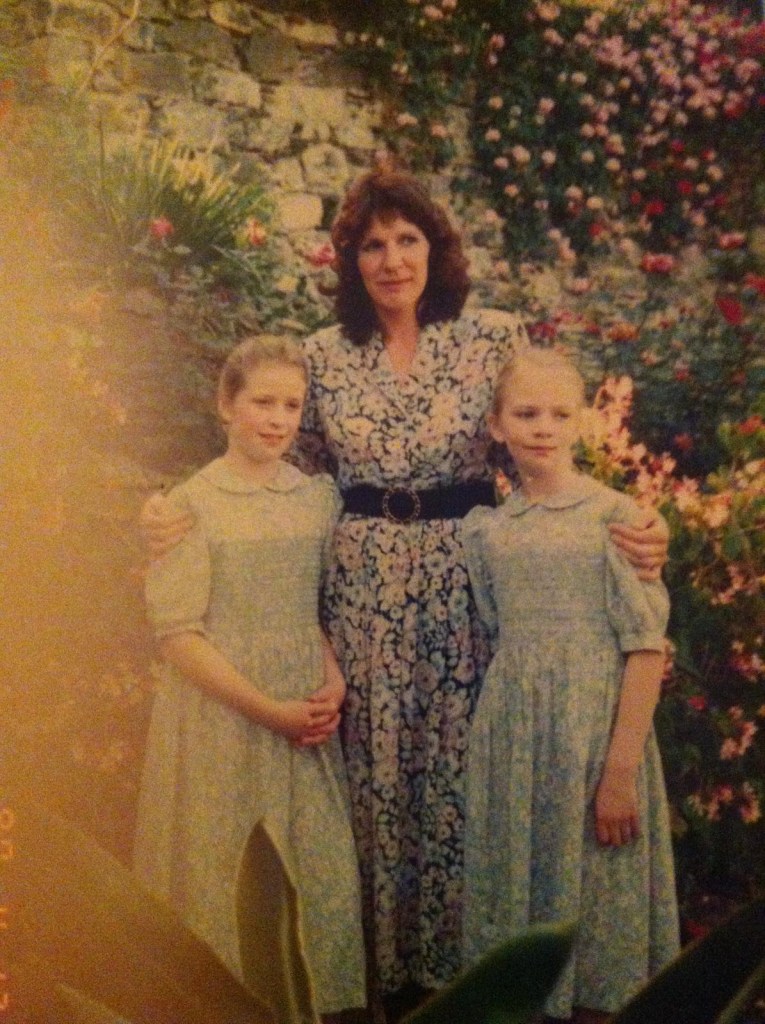
My stepmother Jane, with my sister Katie and me (Juliet for the purposes of this blog) in Madeira in the late 80s.
Discover more from Looking at the little picture
Subscribe to get the latest posts sent to your email.

Hey Chrissy love
I’m so sorry to hear about this. What an awful amount of stress all round and deep sadness and what sounds like hitting your head against a brick wall.
I just wanted to let you know if you wanted a rant, cry, mull things over, then do call me anytime ok.
07833141716
Lucy
Hey Lucy, been thinking of you as I actually had a mammogram call back and biopsy at the same time. Just found out it’s a benign cyst but definitely have been to some dark places this summer! Thanks for getting in touch and I hope you continue well and as always, thanks for being a reader of my many and crazed words!
Lots of love. I hope you are in touch with Katie during her chemo. Life doesn’t seem to get any easier, does it?!
Let’s have that call sometime soon. I am over my bleakest days (and this unexpected turnaround has calmed me, although I remain deeply puzzled.)
Look after yourself lovely lady, and speak soon xxx